
For decades, PCB etching chemistry has largely been managed as a consumable process.
Copper enters the etchant bath. The chemistry removes it from the panel surface. Operators maintain the bath through regeneration, bleed-and-feed strategies, oxidizer additions, and periodic replacement. Eventually, copper-rich streams leave the process and become part of the facility’s wastewater or waste-hauling burden.
It is a model the industry understands well. It is also a model built around the assumption that dissolved copper is primarily a waste management problem rather than a recoverable manufacturing asset.
That assumption is beginning to change.
As copper demand rises globally and disposal costs increase across manufacturing sectors, PCB facilities are looking more closely at what is actually moving through their etching systems every day. Inside those streams is not only process chemistry but significant concentrations of recoverable copper already dissolved and concentrated within controlled industrial systems.
The conversation is shifting from treatment and disposal toward recovery and reuse. Increasingly, electrochemical technologies are becoming part of that discussion.
Why Copper Recovery Matters in PCB Manufacturing
Copper is central to PCB manufacturing. It is also one of the largest operational drivers behind wastewater treatment costs, sludge generation, chemical replacement, and offsite hauling requirements.
Traditional treatment methods focus on removing copper through chemical precipitation. While effective for compliance, precipitation typically converts dissolved copper into metal-bearing sludge that must be handled, transported, and disposed of or processed further downstream. In many cases, the copper itself is no longer easily reusable after treatment.
That creates a difficult equation. Facilities purchase copper materials upstream, dissolve it into process chemistries during manufacturing, and then spend additional money treating and hauling those same dissolved metals downstream as waste. As production volumes increase and copper prices remain strategically important to global manufacturing, more facilities are beginning to question whether that model still makes long-term sense.
The Difference Between Treatment and Recovery
Not all copper removal technologies operate the same way.
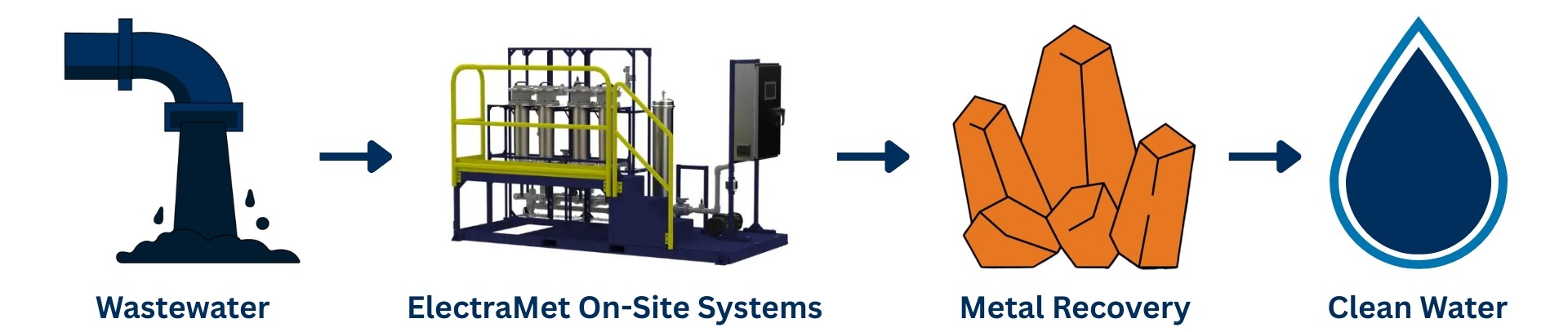
Traditional wastewater treatment systems are designed around discharge compliance. Their goal is to reduce dissolved metal concentrations to acceptable environmental limits before water leaves the facility.
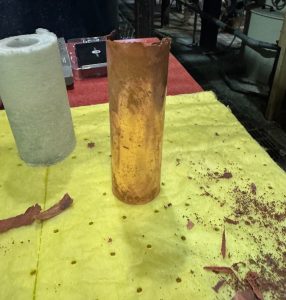
Recovery systems approach the problem differently. Instead of converting dissolved copper into sludge through chemical reactions, they selectively separate copper from solution in a form that retains potential value.
Electrochemical recovery systems use electrical current to drive targeted metal deposition. Dissolved copper ions move through the system and plate onto recovery surfaces as solid metallic copper. Instead of being treated as a contaminant requiring disposal, copper begins functioning more like a recoverable material flowing through the manufacturing environment.
Why Electrochemical Recovery Fits PCB Etching Streams
PCB etching operations create a particular opportunity for copper recovery because many of the streams involved are already highly conductive and copper-rich.
Electrochemical systems generally perform best when dissolved metal concentrations are sufficiently elevated and the chemistry remains electrically conductive. Etchant-related streams often naturally meet those conditions, creating the possibility of recovering copper closer to the source rather than waiting until it becomes diluted across larger wastewater systems.
In some applications, facilities are evaluating whether selective copper removal could reduce copper loading downstream, lower sludge generation, extend etchant usability, reduce bleed-and-feed volumes, and recover copper in a reusable metallic form. The goal is not always full closed-loop operation. In many cases, even partial recovery can meaningfully change operational economics by reducing waste treatment costs and raw material losses simultaneously.
Selectivity Changes the Equation
One of the most important aspects of electrochemical recovery is selectivity.
Traditional precipitation systems often remove multiple dissolved materials together, producing mixed sludge streams with limited downstream reuse value. Electrochemical approaches can be designed to preferentially target specific dissolved metals under controlled operating conditions.
For PCB manufacturers, that distinction matters because etching chemistries are highly sensitive systems. Facilities do not simply want metals removed indiscriminately. They want process stability maintained while minimizing disruption to the chemistry itself.
Selective recovery creates the possibility of removing copper while preserving more of the surrounding solution chemistry, supporting regeneration strategies, chemistry management efforts, or broader recovery initiatives. The goal is not merely waste reduction. It is process optimization through controlled material separation.
Recovery Economics Are Becoming Harder to Ignore
Historically, copper recovery discussions were framed primarily around sustainability. Today, economics are equally important.
Copper prices remain strategically significant due to electrification, data center growth, semiconductor expansion, EV infrastructure, and grid modernization efforts worldwide. At the same time, manufacturers face mounting pressure to reduce waste streams, hauling costs, sludge generation, and chemical consumption.
That combination changes the financial conversation around dissolved copper. What was once viewed purely as treatment liability increasingly carries recoverable value. For PCB facilities processing large etchant volumes, even incremental recovery improvements can influence total wastewater treatment costs, chemical replacement frequency, sludge handling requirements, and long-term sustainability goals.
The economics vary by facility, chemistry, throughput, and process design. But the broader trend is becoming visible across industrial manufacturing: dissolved metals are starting to be viewed less like waste and more like misplaced inventory.
The Industry Is Still Early in the Transition
Electrochemical recovery is not a universal replacement for every PCB wastewater challenge. Facilities still operate with complex chemistries, mixed waste streams, variable production schedules, and highly specific process requirements.
That said, the industry’s perspective is evolving. The conversation is no longer limited to how facilities can dispose of copper-bearing waste safely. Increasingly, manufacturers are exploring how to stabilize chemistries, reduce downstream treatment burdens, and recover valuable materials already circulating through their operations.
Electrochemical recovery technologies are moving from niche discussions into broader operational planning conversations. Not because regulations alone demand it. Because the economics, supply pressures, and sustainability realities are beginning to align in the same direction.
Up Next: Wastewater Treatment for a Circular Economy
Next up, we will look at the bigger picture: how PCB manufacturing, copper recovery, wastewater treatment, and circular resource strategies are converging into a broader conversation about resilient manufacturing and material efficiency.